



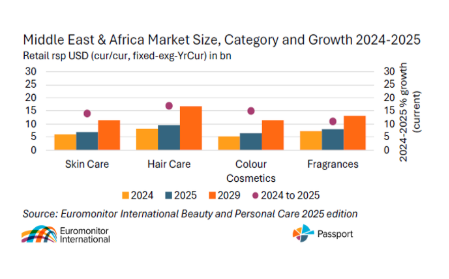
The rise of the A-Beauty trend reveals a dynamic shift towards cultural identity in the beauty and personal care industry in the Middle East and Africa, driving growth to $44 billion in 2025, according to data analytics company Euromonitor International.
According to Euromonitor International’s latest report, ‘Arab and African Beauty: The Story of Identity, Innovation and Opportunities’, A-Beauty highlights regional cultural beauty trends and opportunities by showcasing indigenous ingredients suited to local skin tones and hair types, expressing identity and heritage rather than following global influences.
Amna Abbas, senior research consultant at Euromonitor International, said, “Young people in the region play a significant role in shaping authentic beauty trends. Arab and African beauty enthusiasts are keen to highlight their unique cultures. With 48% of the Middle East and Africa’s population under 20 years old, it’s clear that local beauty ideas have a powerful effect.”
The A-Beauty trend is driving major changes in the region’s beauty and personal care market. Hair care leads the way, growing 17% from 2024 to 2025, with the sector expected to reach $17 billion by 2029.
Hair care, skin care, colour cosmetics and fragrances are fuelling the A-Beauty trend, supported by economic diversification and greater female workforce participation. Rising incomes are driving demand for personal care products and reflecting shifts in lifestyles.
In the Middle East, beauty is tied to cultural and religious norms. People favour natural, hydrating, halal products to address skin concerns such as dry skin or uneven skin tone. Fragrances like oud, frankincense and rose are important in both routine and luxury use.
The A-Beauty movement is driven by cultural identity, emphasising Arab beauty ideals that celebrate unique features such as prominent eyes and bold brows.
Euromonitor International’s Voice of the Consumer: Beauty Survey 2025 shows that “being comfortable in your own skin” is a beauty perception for 56% of South African and 40% of UAE consumers. South Africa surpasses the global average of 38%.
Africa’s beauty market is diverse, with consumers seeking products tailored to their specific hair and skin needs. Local ingredients such as shea butter, baobab oil, and marula oil are prized for their efficacy and cultural significance.
African brands are leveraging local knowledge and authentic storytelling to create products that address concerns such as hyperpigmentation, dryness, and textured hair care.
Rubab Abdoolla, senior consultant at Euromonitor International, said, “A-Beauty highlights indigenous ingredients with cultural significance. Brands leveraging the region’s biodiversity and traditional knowledge can offer unique products that appeal to consumers.
“Euromonitor International’s Voice of the Consumer: Beauty Survey 2025 found that nearly 79% of consumers in the UAE and South Africa are satisfied with available products on the market.”