


Nigeria has achieved a significant milestone in its climate and biodiversity agenda by successfully launching the Biodiversity Finance (BIOFIN) and Business Advisory Group (BAG) initiative. This launch marks a dedicated move to mobilise private-sector finance for nature conservation and to integrate environmental goals into Nigeria’s core economic planning.
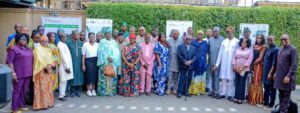
The high-level event, held at the Johnwood Hotel in Abuja, convened government officials, development partners, and leading business executives to co-create actionable pathways to align private capital with the country’s National Biodiversity Strategy and Action Plan (NBSAP).
The initiative is built on a powerful partnership between two leading Nigerian organisations, the Nigerian Conservation Foundation (NCF) and Natural Eco Capital, and the global coalition Business for Nature (BfN). This collaboration aims to strengthen dialogue and action across business, government, and civil society to achieve national biodiversity goals.
This partnership is a key component of Business for Nature’s national projects initiative, designed to bridge the gap between global environmental ambition and national implementation, particularly concerning the Global Biodiversity Framework (GBF), the 2022 global plan to halt and reverse nature loss by 2030.
The collaborative effort is urgent given the mounting threats to Nigeria’s natural assets from unsustainable land use, deforestation, pollution, and climate change. The private sector, spanning agriculture, extractive industries, and manufacturing, exerts significant pressure on ecosystems but also holds untapped potential to drive conservation and restoration.
Facts presented by the Nigerian Conservation Foundation underscore the scale of the crisis, including forest loss (only about 4% of Nigeria’s original forest cover remains), annual destruction about 400,000 hectares are lost annually to logging, agriculture, and urban expansion) and tree cover decline (between 2000 and 2020, Nigeria’s overall tree cover declined by 13%, cementing its position as one of the fastest-deforesting countries in Africa).
To combat these alarming trends, the project will establish BAG, a permanent platform for knowledge exchange and alignment of corporate strategies with the NBSAP.
Simultaneously, the partners will develop a Business Action Plan (BAP) that provides clear, defined steps for companies to support Nigeria’s biodiversity and climate goals.
Key focus areas include building capacity and awareness for nature-related action across vital economic sectors, helping companies understand, measure, and manage their dependencies, impacts, risks, and opportunities on nature and supporting Nigeria’s net-zero pathway and contributing directly to SDG 13 (Climate Action) and SDG 15 (Life on Land).
Leaders from the partnering organisations restated that conservation must now be viewed as an economic necessity, not philanthropy.
Dr Joseph Onoja, Director General of NCF, said, “This partnership creates a unique platform to engage the private sector as an essential partner in restoring ecosystems, creating green jobs, and safeguarding Nigeria’s natural heritage for future generations.”
Dr Eugene Itua, CEO of Natural Eco Capital, noted that “nature is one of our most valuable assets, and its protection must be seen as smart economics, not philanthropy”.
“By linking biodiversity targets with business strategy and national development priorities, this partnership will help companies understand, measure, and manage their dependencies, impacts, risks, and opportunities on nature in ways that create shared value,” Itua explained.

Chris Aiwuyo, Deputy Director of Forestry, Federal Ministry of Environment, pointed out that “partnerships like this are vital to ensuring that the Nigerian private sector, civil society, and government move in the same direction to align investment and innovation with our biodiversity and climate goals”.
Additionally, Oluwasooto Ajayi, African Lead, Business for Nature, explained that “this collaboration will help accelerate progress for nature in Nigeria by connecting private sector leadership with national biodiversity and climate priorities”.
The launch signals a necessary policy shift, recognising that climate change and nature loss are deeply interconnected and require integrated action. This mandate will help Nigerian businesses manage risks, attract investment, and strengthen their competitiveness in a future-ready economy.