


Natural Eco Capital announced the successful validation of the No Objection Procedure (NOP) Manual for Green Climate Fund (GCF) projects at a two-day capacity-building and validation workshop held in Kano on December 2–3.
Nigeria took a decisive step to streamline its access to global climate investment by officially validating the national NOP manual for GCF projects, which aims to transform the country’s climate finance pipeline from a trickle into a steady flow.
The manual, developed by Dr Eugne Itua and the Natural Eco Capital team, provides a standardised, transparent framework for approving and fast-tracking projects seeking funding from the GCF—the world’s largest dedicated climate fund.
This move directly addresses long-standing criticisms of bureaucratic delays and opaque processes that have hindered Nigeria’s ability to secure its share of international climate capital.
Convened by the National Council on Climate Change (NCCC), the workshop assembled a diverse group of stakeholders, including government officials, civil society organisations, private sector representatives, academia, traditional institutions, and international partners, to review and endorse the new manual.
In remarks delivered on behalf of the Director-General of NCCC, Teni Majekodunmi (represented by Benny Ejiofor), the NOP manual was described as Nigeria’s official gateway to the GCF.
The manual ensures rigorous compliance with international fiduciary, environmental, and social safeguards, providing a transparent and inclusive pathway to climate project financing.
Kano’s Commissioner for Environment and Climate Change, Dr Dahiru Muhammad Hashim, highlighted the state’s progress in climate finance readiness, including the creation of a State Platform on Climate Finance, supported by the PACE–FCDO programme.
Meanwhile, the Managing Director/CEO of NIRSAL Plc, Babajide Arowosafe (represented by Abubakar Ahmed), emphasised the need for strong NOP mechanisms to deliver bankable proposals, especially in climate-smart agriculture and rural infrastructure.
Key outcomes from the workshop included validation of the manual’s alignment with Nigeria’s Nationally Determined Contributions (NDC 3.0) and Long-Term Low Emission Development Strategy (LTLEDS), while noting room for enhanced greenhouse gas reduction estimates.
The manual’s structured review process, defined service timelines (80 days for standard projects and 100 days for high-risk projects), and a new digital submission portal were all endorsed.
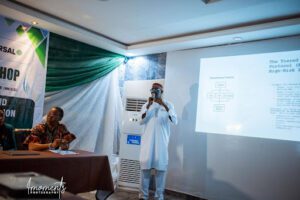
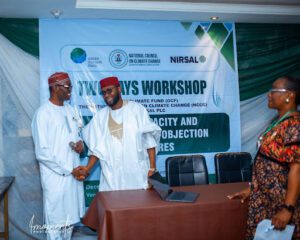
CAPTIONS: 1. A Cross Section of Some of the Stakeholders at the Validation Process in Kano of No-Objection Procedure (NOP) Manual for Green Climate Fund (GCF) Projects; 2. Dr Eugene Itua of Natural Eco Capital warmly welcomes Honourable Commissioner for Environment and Climate Change, Kano State, Dr Dahiru Muhammad Hashim, to the No-Objection Procedure (NOP) Manual for Green Climate Fund (GCF) Projects in Nigeria, while Benny Ejiofor of NCCC looks on; 3. Dr Eugene Itua of Natural Eco Capital presenting the Keynote Address during the validation of the No-Objection Procedure (NOP) Manual for Green Climate Fund (GCF) Projects
To maintain strong environmental and social safeguards, the workshop confirmed the adoption of a 100-point scoring matrix and the critical ‘Fatal Flaw Clause’.
Participants also acknowledged the manual’s commitment to stakeholder inclusivity, recommending improved access for women, youth, persons with disabilities, and traditional institutions.
Recommendations underlined stronger alignment with climate goals, enhanced grievance mechanisms, improved sector coordination, and robust monitoring and evaluation frameworks with specific, measurable indicators.
Additionally, stakeholders called for extensive nationwide training and capacity building extending to subnational levels and local government areas to ensure uniform understanding and effective implementation.
The workshop witnessed a unanimous approval of the NOP manual as a foundational document that will bolster investor confidence, enhance predictability for partners, and solidify Nigeria’s credibility in the climate finance arena.
Also, stakeholders pledged ongoing collaboration centred on transparency, accountability, inclusivity, and expanded capacity-building.